




- Business For Unicorns Podcast
Do Less, But Better: How Max Waldron Built a Gym for People Who Hate Gyms
[00:00:00] Welcome to the Business of Unicorns podcast, where we help gym and studio owners create a business and a life they love. I’m your host, Michael Keeler. Join me and the Business of Unicorns team each week for actionable advice, expert insights, and the inside scoop on what it really takes to level up your gym.
Get ready to unlock your potential and become a real unicorn in the fitness industry
Hello, my friend. I got a question for you. Is your gym undercharging compared to your value? Are you kind of unsure how to fix your pricing without pissing off all your clients? Well, I, I’ve been there. We’ve all been there. That’s why we made one of our most popular resources yet. It’s called the Raise Your Rates Playbook, and it’s just what it sounds like.
It’s a step-by-step system, including some key [00:01:00] considerations that you wanna think about, some copy and pastable templates, all to get your pricing to market rates while minimizing pushback from your clients. And if you already have a copy, if you’ve already downloaded it in the past, imp- it’s important to note we’ve recently updated it with some brand-new templates, some new clarifications on best practices, and we’ve updated, um, some pricing suggestions based on your model.
So if you haven’t, um, gotten our Raise Your Rates Playbook, uh, in a while or raised your rates in a while or ever, this is the plan you need. So click the link down below in the show notes and download your free copy right now. Hello, fitness business nerds. What’s up? Welcome to another episode of the Business for Unicorns podcast.
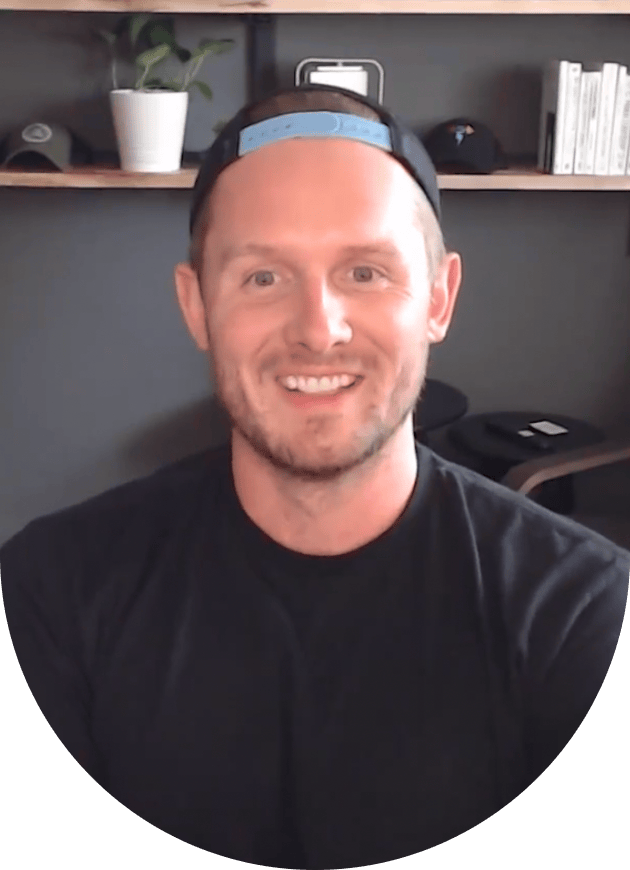
I’m stoked for today’s episode ’cause we’re gonna have someone on the podcast who’s been working with us at Unicorn Society for a while now. He’s also been a gym owner, a very impressive gym owner, for many years. He is the founder, owner, and mad scientist over at The Performance Hub, which is over in Melbourne, Australia, I think just outside of downtown Melbourne, if I remember correctly.
And I’m so excited for, to share his story today [00:02:00] and share little nuggets of wisdom that you can all take away and steal from this episode. So please welcome to the podcast Max Waldron. Welcome, Max. Thank you, Michael. Really excited. Longtime listener, first-time caller, so this should be fun. Yay. I’m so excited that you agreed to do this.
Uh, I’m not kidding when I say that you are such an impressive gym owner. You’ve accomplished so much in, in your time in this industry. And you came and worked with us at a time when you were already pretty great at it. And so it’s been great to work with someone like you in Unicorn Society, who our job has just been to help you make things even better, and we love doing that work.
Thanks for trusting us and continuing to work with us. It’s been a blast, and I hope we get to do it for many years to come. But let’s just start by having you introduce yourself. So for folks who don’t know you yet, just give us the quick version of like who are you, what does your business do, and where does the business stand today?
Yeah. So obviously my name’s Max, and as Michael mentioned, I’m not from the US. I’m here in Australia, and I will do my best not to [00:03:00] speak too Australian. I’ve gotten better at holding the accent in. But we, at The Performance Hub, are a small group personal training gym. We specialize now in people who don’t like gyms.
So what started as a joke of, “Yeah, we’ve got a gym full of people who aren’t really gym people,” I identified that as being actually that’s really our core position. A lot of our clientele will be 40 plus. They- they’re busy, they have careers, they have competing priorities, but equally they are people who do not feel comfortable or confident walking into a mainstream gym.
And I love working with these clients, the f- the fitness misfits. They’re– I get a lot of satisfaction and a lot of enjoyment out of working with them. And my background prior to that was in high performance sport. So I was a strength and conditioning coach, exercise physiologist, whatever you wanna call it, and really scratched that itch.
And afterwards I really [00:04:00] struggled going into the private sector Because coming from that high performance environment where there is such an emphasis and such a attention to detail on the quality of what you’re doing, going into a regular gym and being told, “Oh, they’re just gym pop people, it doesn’t really matter.”
Mm-hmm. That just never sat well with me. So really what we’re doing is applying the same principles, the same quality, just to everyday people who I think deserve the same care and attention that professional athletes do. Yeah. Well said, Max. Bravo. Yeah. I, honestly, it’s a reason why, another reason why we love working with you so much.
And when I first learned about your business, it really spoke to me on a personal level, ’cause we started Mark Fisher Fitness nearly 15 years ago now. We’re one of the first gyms we had ever heard of that had a similar mission, right? Mm-hmm. When we first started 15 years ago and said, “We wanna be a place for people who don’t like gyms,” we couldn’t find anyone else talking about that 15 years ago.[00:05:00]
And I think we’re very fortunate, not that it’s mainstream, but there’s more people like you out there in the world. And since then there’s been some bigger brands like kind of Nerd Fitness and people who really have been fitness spaces for people who don’t consider themselves traditional fitness goers.
And so just thank you. Thank you for doing that work. Thank you for representing the majority of humans on this planet who don’t feel comfortable in traditional gyms. Yeah. And bravo to you and your team. I think it’s important work that you’re doing, so thank you for that. Let me, let’s go back in time a little bit to before we started working together, before you joined Unicorn Society.
I think you joined us, I think I said earlier, like, when you were already five years into business. And I think things were actually going pretty well from overall perspective. You had good members, you were building a team. But I also know you had some stresses, some anxiety. So talk a little bit about what was going on back then.
What was really going on under the hood of the business? Yeah. So I think y- you’ve summed it up quite well. On paper, and even day-to-day, things were actually going quite well, [00:06:00] right? But what the, uh, reality was, there was a sense of chaos- Mm-hmm … that came with that, and it was in a big transitional period for me.
I’d previously had a partner in the business. Partner had exited, so now it was me on my own, which in many ways was a very positive thing. Mm-hmm. It was like, “Okay, now I’m free to move forward. We can enact a lot of positive change.” And that was all being really well received. However- At the same time going, okay, after five years there are a lot of systems that exist.
However, are all the systems clear? Are all the systems- Mm … being followed? Do we have the right systems or is it a case of we’ve got 50% of an old system and 50% of a new system, and we’ve got long-term staff and newer staff, and everybody’s on the same page kind of, or maybe [00:07:00] everybody’s in the same book, but we’re not necessarily on the same page.
Agreed. Mm-hmm. Right? Yeah. Yeah. So that was really what started, and I’d been a follower of BFU. I was aware of you guys. You came highly recommended by, I was working with, and I still work with Jim Member Machine. GR was singing your praises, and I did recognize I need an objective set of eyes here to get me- Mm
out of my own head- Yeah Some, yeah, some objective thinking, a different lens, and somebody to tell me the things that I probably already knew, if I’m being honest. Yeah, 100%. Yeah, listen, Max, you’re not alone. When we- people join Unicorn Society, that’s one of the top things we hear, was like- Yeah … “I know what I’m doing mostly, but I’m having trouble discerning from, in all the chaos, what really matters and what doesn’t, how to get everyone from being on the same book to on the same page.
And I also, I think I know how to do it, but I need some– I would like someone to tell me that I’m on the right track. I would like someone who’s already done [00:08:00] this to tell me that I’m not crazy. That like my ideas are pretty damn good.” And that kind of like external validation from someone who knows what you’re going through and has walked in similar shoes, it’s worth its weight in gold.
Part of the reason Mark and I even started Business for Unicorns is ’cause we had those coaches. We had coaching groups and one-on-one coaches we worked with growing MFF. We realized how valuable it was to have that external person just be like, “Yeah, Michael, that’s a good idea. Go do it.” Yes. It’s, it’s so helpful when you’re on your own to feel like you have that, that person who is– got their eyes and ears on you.
Good for you for recognizing that. Not everyone does. Some people just silently suffer, and their business stalls because of it, but you were proactive and got the support you needed. Good for you. Another thing that I heard you say about that same time was when you were stuck in that moment of being on your own now without your partner and trying to think through how to improve the business in this next chapter, you had said that you felt like you lost the ability to make decisions and execute, right?
Yeah. You were maybe [00:09:00] stuck in this maybe analysis paralysis, which I know you’ve said at some point was your strength. You kn- you used to be really good at being decisive and executing. And so could you just talk more about that? What did it feel to be in that kind of like analysis paralysis? Yeah. I think I’ve always been an overthinker.
I think at the surface, people go, “Oh, he’s impulsive.” And I’m, yeah, I’m more than willing to take the chance and to take the risk. But usually that comes after a lot of thought and consideration. Mm-hmm. And I honestly felt that the circuit was broken- Mm-hmm … right, where I just couldn’t get the final piece of the puzzle to actually do almost anything.
And I, honestly, it felt like a period of existential crisis, if I’m being dramatic. Let’s be dramatic, yeah. I was being dramatic. And I think it was– There was, yeah, there had been the business change. I’d also had my second child. Mm-hmm. So, okay, I’ve now got two children, so the demands on my time are very different.
And I’m sure a lot of gym owners and just adults in [00:10:00] general, you go through different stages of your life, and you have different responsibilities and different priorities, and you can’t approach life the same way that you did in your 20s when- Yeah … you could do whatever you wanted and there weren’t any real consequences.
So I think it was a, a lot of different factors there. Mm-hmm. And part of it was almost, if you were to ask Ben, who I was working with in the past 12 months, say- Yeah It was me going, “Okay, so I’ve done this, and I’ve looked at this data, and I’ve done this, and I think that I need to do this.” And he’s like, “Yes, you should probably do that.”
It’s like, great. I just needed that last confirmation to say- Yeah … “Yeah, that’s a good idea.” So yeah, it really did feel that way. Yeah. And almost thinking that I think I needed to make some decisions- Mm-hmm … to have some positive outcomes from the decisions. Yeah. And now I’m in this place where now I have that body of evidence again to go, “No, you can make decisions.”
Yeah. You were just stuck in your own head for a little bit, and I think that’s probably [00:11:00] something a lot of gym owners or business owners in general could relate to. Yeah. I have no doubt people listening to this podcast as we speak are like, have their headphones on, and they’re nodding their head, right?
That’s 100% like a super relatable like experience to feel, I know, I think I know what’s next, but I just don’t have the confidence yet, and you, you’ve gained it since, to make that decision on my own. I need some people to help me through that. So good for you for being reflective in that moment. So I think when we started working together, I looked back at some of your coaching call notes with us, and a lot of the fixes that we put in and helped you implement were not new systems, were not new skills.
It was really about executing on the systems you already had in place. Going through, and as you mentioned a second ago, auditing what you had in place, making some adjustments, and I think the main thing from my view, and tell me if this resonates with you, was really just adding in some accountability.
There was accountability for people on your team to make sure they [00:12:00] were really doing what they said they were gonna do. Accountability of yourself to make sure you were showing up as the manager and leader doing the things you know you wanted to be doing. And one, d- was that what it felt like? And two, talk me through if so, what was, what did that accountability look like practically?
Like, how did you actually achieve those things? Yeah, I think that’s a very good summary of where we were at. And I recognized that, and it was a big reason why I wanted to work with BFU as well, because I think I didn’t need to be told what to do. I didn’t need to learn new things. I needed to be reminded of the things that I already knew- Yeah
and I needed to be held accountable to actually action things within timeframes. The simplest things where the, you called the mission control meeting- Mm … our weekly, is really important, right? Having the dashboard up to date is really important. Having clear roles and your SOPs in order is really important.
And none of that is new and none of it is sexy and none of it is fun. [00:13:00] Yep. But it’s what I really needed to hear in that moment. So in a practical sense, what it looked like was even the onboarding process was interesting ’cause at fa- I was like, “Yeah, I already know all this.” But then having the humility to go, “But are you doing it?”
Yeah. And it was a case of even in some of the scorecards where I think I’m about 75% in all areas. Mm-hmm. And as a result- It’s not r- I can’t really be surprised or upset that things aren’t going as smoothly as I want them to be. Yeah. Yep. So that was a big wake-up call. And then I think just the, the weekly accountability of, okay, have you done this?
Have we ticked off this? The quarterly planning. Okay, let’s put this in place, and I’ve implemented this across the board with the team of, okay, are we on track with our quarterly projects? Yep. Now, yes, we’ve got the target, but let’s break this down. Let’s make sure everyone’s clear. And being brutally honest, let’s do less.
[00:14:00] Less, less new ideas, but let’s actually action things to completion as opposed to if you want someone to get 10 things started and to get them 75% of the way there, I’m your guy. I could do that every day of the week. Yeah. What I find difficult is the, okay, it’s that last bit, and I’m sure, what’s the book, the Jim Collins one?
“Good to Great,” right? Yeah. There’s a big gap between being good and being great. Yeah. And I think it is that, that last bit where it’s boring and it’s tedious, but it needs to get done, and that’s what I found very helpful. Yeah. Well said, Max. I think that’s such a, such a good example of the kind of wisdom you get from doing this kind of work, to say, let’s do less, but do it better.
Let’s just not be good at some of the things. Let’s be great at less of the things, right? Let’s do less but better. And that’s a hard thing to do ’cause oftentimes the solutions that we are drawn to that feel fun and new are new, sexy new things, the shiny new objects. And often what it takes to get across the finish line, to that last [00:15:00] mile of 100% implementation, is a lot of repetition, a lot of not sexy, just doing the basics.
And the phrase that we always turn back to in Busy Phoenix Wins is, “We wanna be excellent at the basics.” Yes. And you know this from working with your clients, all of you listening to the podcast too. Working with our clients, often the thing that got them from A to B is not the thing that gets them from B to C, right?
Losing that first 10 pounds, that first body weight deadlift, whatever it is. To get to the next goal, it’s often a new thing you need to develop, right? But it’s all about getting back to the fundamentals, right? If your biomechanics aren’t right, if you’re not fueled for your workout, if you didn’t get enough sleep or water, right?
It’s the fundamentals that determine your ability to perform at your best, and the same thing is true for your business. The non-sexy, I have a dashboard that’s complete. I have regular meetings with my team. We’re very clear on our quarterly projects. We don’t just have SOPs, but they’re followed consistently by everyone [00:16:00] always.
None of that feels sexy, right? But it’s exactly what it takes to become great. So let me ask this piece of it. So it’s one thing to get clear about all that for yourself for Max, right? For Max to know, I want to double down on being great and following through and getting that across that, to that 100% completion line.
It’s another thing to bring your team along for that, that transition and that journey. So talk to me a little bit about what did it take to get your team on board with that kind of accountability to really follow the SOPs all the time, double down on being excellent at the basics? What did it take to bring your team along?
Yeah, that’s a great question. I think overall, the biggest thing that I’ve found, and I’m sure you would agree, is I’ve got a very good team. I’ve got a great team, which I’m very grateful for. And what I’ve found is if you [00:17:00] have the right people, if there’s ever an issue where they’re not performing or things aren’t getting done, in my experience, it’s pretty much always because it wasn’t clear what you wanted them to do in the first place.
Yeah. Okay, so this idea of we had a big heart to heart at the start of this, end of last year, like a yearly review, and it was, okay, everybody needs clarity. Yeah. Because you can’t really have accountability without clarity, right? What is y- what is your job? What do I want you to do? What does a good week look like?
What does a great week look like? What, what does success actually mean? And then from there, what I’ve found is people want the accountability. People want to know that they’re doing a good job, right? So it’s actually not that difficult once you establish what it is that you want them to do, and that’s r- honestly the hard part ’cause obviously they go, “Actually, the problem is me.”
To quote Taylor Swift, “It’s me.” Yeah. So that was the biggest thing, being able to go, “Actually, it’s on me to [00:18:00] do this.” Yeah. And then once I’ve made it clear and somebody isn’t meeting expectations, that’s when the accountability comes in, and that’s also where the team meetings come in every week. Yeah. I think if you have a regular cadence for discussing these things, you prevent issues developing, right?
Yeah. Which I would rather have more regular conversations where, “Okay, we missed this week. What do we need to do differently next week? Do you need help? Do you need support? Is it unclear of what I need you to do? Okay, great.” That’s far better than, “Okay, this hasn’t been discussed ’cause we don’t have the systems in place,” and then it’s been three months that someone’s been underperforming.
Mm-hmm. And that’s a very difficult conversation to get into. So if I was summarizing that, I would say it’s getting clear on the roles, the responsibilities, the expectations, and then being proactive with it, proactive with the communication, proactive with team meetings or whether it needs to be one-on-one meetings, whether it’s how you’re onboarding staff, making sure that process is very clear.[00:19:00]
Um- Yeah … ’cause yeah, I think in my experience, I would far rather prevent problems than deal with them. So yeah, whatever we can do to prevent them happening in the first place, I’m- Yeah … gonna put as much effort as I can into that. Yeah. That’s fantastic, Max. I know that what you said, I think to a lot of our listeners probably sounds, yeah, of course, we need to be clear about the tasks, and of course, once we’re clear, we can hold people accountable.
That is so easier said than done, right? Oh, yeah. It’s so easy to say, “Oh yeah, it was totally clear, and now I can hold people accountable,” and but it’s, it’s tough to do. And a lot of folks that I talk to get stuck in the same cycle you were describing, which is- They were a little bit hesitant to really truly hold people accountable, and by that I mean have consequences for underperformance because there was always some part of them that knew they weren’t as really as clear as they could’ve been.
And so I can’t really hold someone accountable or have some real consequences like writing you up or firing you because I know there’s some part of me that [00:20:00] knows I really wasn’t as clear as I could’ve been. And when you can get clear about who’s gonna do what by when and how will I know it’s done, then you can really start to have real accountability, right?
And that, that magic phrase that I just shared, who’s gonna do what by when and how will I know it’s done, is easier said than done. It takes a minute at the end of a meeting to really make sure that we’re leaving this meeting, you and Max, really clear about what you’re gonna do next, Max, when is it gonna get done, and how am I gonna know that it’s done and that it’s done well?
And that takes a, a moment to do. And often meetings are like the container for that conversation to happen regularly. And if you don’t have those- Yeah … then it’s so easy for shit to slip. Months goes by, resentment builds, and then it’s a problem that you didn’t want in the first place. What would you add to that?
Yeah, I would absolutely agree. And I think the other, to address the elephant in the room, is typically we’re working in small, very close-knit [00:21:00] teams where people are friends. Yeah. And I know you did a talk in, in Denver on this, how to manage friends- Yep … how do you lead your friends? And I think that’s where the meetings become very powerful because we’ve created a medium of communication that is not based on friendship, right?
Mm-hmm. It is a– We put a container on it. So in the meeting, we’re talking about the agenda items of the meeting. We’re not talking as if we were friends. I think that becomes really important. Yeah. And also being able to– Like when we’re reviewing our scoreboard and things, it’s not attaching a label of it being good or bad, right?
Mm-hmm. So it’s either we’re on track or we’re off track, or it was done or it wasn’t done. There is no real room– And I’m very much the king of nuance generally, but in these instances when you go, “No, it’s not good or bad,” and I’m not gonna– I’m not actually blaming you at this point in time. I’m saying, “Did it get done or did it not get done?”
Yeah. Yes or no? That’s step one. And then if it didn’t, okay, then let’s move that to if it needs to be on the issues [00:22:00] list or if we need to set up a different meeting to discuss it. Let’s make sure that we do that. Because something that I got from Conor Fleehive years ago, who is in Chicago, I think, something he said, “Clear is kind.
Clear is kind. Clear is kind.” He said it over and over and over again. Yeah, it’s a Brene Brown quote. Yeah. Yeah. It’s s- found it to be so true. Yeah. So if you– especially if you wanna preserve the relationship, it’s like actually being clear, and obviously speaking in kind terms in general helps. Yeah. But being clear about what you wanted helps you get on the same page, and then you’re going to have a far better relationship than- Not addressing it, sweeping it under the carpet, and then it builds and builds, and then you have that resentment.
And nobody wants to be in that environment. Yeah. I just love your emphasis on being proactive, right? It’s like that proactive- Mm-hmm … non-judgmental communication of, “I’m not blaming you, I’m not mad at you, but let’s just be honest, this wasn’t done. Let’s talk about it. What happened? I wanna be honest with you, this is off track.
Our goal is X [00:23:00] and your number is Y. Let’s talk about it,” right? “You’re not, no, we’re not in trouble, we’re not mad, but if we don’t talk about this, the business is gonna grow. You’re not gonna grow in your career. You’re not gonna grow in your job,” right? And so I lo- I think that’s so wise and hard to do.
Hard to do, especially with people who are your genuine friends, to have that, that structure in place, to have that really clear conversation. It really is so important when you can get it right. So good for you. That’s huge. I feel like I wanna stay on this topic and ask a million more questions, but I know we’re gonna be running out of time.
So I am gonna, I wanna move on. But let me ask you this. Talk a little bit about where your business is now. I think we’ve only been working together for, I think a little less than a year. Is that right? I think you had joined end of 2025-ish. And, and so talk to me a little bit about now that you’ve been putting those, these systems in place, some more accountability, more regular meetings, clear planning.
Talk to me a little bit about both either from a numbers perspective or from a, a qualitative perspective, where is your business [00:24:00] now because of these changes you’ve put in place? Yeah. It’s in a very strong position. Yeah. So I mentioned before we started recording that we are in the peak of Australian winter, and we’re not seasonal per se, but we absolutely see some trends.
So typically there’d be whether there’s members traveling and things like that. So attendance would drop, utilization would drop. This is the highest our utilization has ever been. Wow. So we’ve had wait lists to the point where, okay, we’re now adding additional sessions both mornings and evenings, because when your utilization gets above 100% week over week, that’s, that becomes quite a problem.
It’s like- Yeah … okay, this is now creating more issue. It’s a good problem, but it is a problem. So that’s been the next thing. But also feeling really clear and confident about making that change and doing that has been probably the biggest thing. And then also feeling like, okay, our revenue’s [00:25:00] as high as it’s ever been.
We’ve got wait lists. We’re in the peak of winter, and we’re about to head into spring in, what, six weeks time. We know that we’ll get busier and busier. So that’s one thing. And then also having the roles outlined where there’s staff members taking on more responsibilities- Mm … which frees up some of my time to focus on some of the bigger picture things and action some of the next phases, which is, yeah, we’re looking at, okay, additional locations.
How’s the expansion gonna look? How’s recruitment gonna look for that? So that’s been quite– It’s been really reassuring in the short term, but then overall as I look to the future, the real sense of excitement there as well. Yeah, of course, it’s always daunting and scary, but the excitement is quite overwhelming at this point.
So yeah, really happy about the state that we’re currently in and really excited about the future as well. Yeah. That’s amazing, Max. Congratulations. To be at a [00:26:00] place where you have highest revenue you’ve had, a wait list for a lot of your sessions, looking at expansion, actively delegating things from your plate to team members who want to grow their roles and responsibilities so you can focus on charting a course for what’s next.
What you’ve just described, I think, is a lot of gym owners’ dream, right? To be- Yeah … at a place where the business is starting to be a mach- an engine that really runs. It needs you maybe a little bit less, so you can focus on building the next thing. And none of it’s easy, right? I’m not here to paint a too rosy a picture.
I’m sure it’s still challenging. Even having a wait list every day is a problem to solve, right? But, but good for you. That’s fantastic. And it’s, and it’s, it’s because you’ve really doubled down and been really self-reflective on where you’ve been the bottleneck in the business and continued to put one foot in front of the other to make meaningful improvements.
So good for you. Let me ask you one kind of wrap up-y question as we get to the end of our time here, which is- If you could sit across the, from yourself from a year or two ago, let’s say two [00:27:00] years ago, and give that, that former Max some advice at that moment when you were stuck in that kind of operational messiness, maybe overthinking things, what would you tell Max from a year and a half ago that would be most useful for him to hear?
Ooh, that’s a good question. I think it would be I would tell him to get out a piece of paper. Yeah. Tell him to write down all… That, which it would be a very full piece of paper. All the- The list piece of paper, yeah. A real, a whiteboard even. Write down all the issues, concerns, all of your worries, if you wanna call it that.
Mm-hmm. Then I would get him to write down, which would be a far shorter list, which would be, what is absolutely a good idea regardless of any of these things? That would be maybe you need to simplify. Definitely you need to get an external set of eyes on this. Mm-hmm. You need to go and find someone who has done this before.
That would be [00:28:00] the biggest thing. And then the third thing I would actually encourage, and I encouraged gym owners to do this sort of as well, is actually take stock and look at, all right, we’re very good at focusing on the gap of all the things we haven’t done yet and all the things we haven’t accomplished.
Maybe take a moment to acknowledge what you have accomplished. And I come back to this, I opened my gym three weeks before COVID hit, and we had two weeks worth of, two years, sorry, worth of lockdowns. It’s like- Yeah … if you can make it through that, you’re probably gonna be fine. Right? Yes. It’s going to be okay.
Yes. But the main thing would’ve been listed out and action those things, and one of the key ones would’ve been you need an external set of eyes, so go and find someone who’s done this before. Yeah. Which consequently I did, and spoiler alert- Yeah. … it’s going quite well. Yeah. That’s amazing. Good for you.
Good for you. I love that advice, and I think even just that first piece is so valuable. Just getting out of your head and writing down all the things that are swimming through your head. Put it on a list. Yeah. Put it on a [00:29:00] whiteboard. Then you can sort through and prioritize. Celebrate the wins. Celebrate the things that are going well, and make sure you really take time to pat yourself on the back or smell the roses, whatever analogy you wanna use.
And then get really clear about where do I need some help, maybe some external support. What are the things I can take action on right away that are great ideas? I think that’s really smart. Good for you, my friend. I think our listeners hopefully are taking lots of notes on that idea. I’m going to do it immediately.
If people wanna continue to hear your story as it evolves and follow you or follow your gym, where, Max, can they find you online? Best place, I’m not r- I’ve really had a bit of a social media detox, but you can still find me sporadically. Yeah. Uh, on Instagram is max.strength, and the gym is called Performance Hub.
So if you search that on all of your different ways, Google- Yeah … Instagram, et cetera, we will pop up. I love it. We’ll put those links down below in the show notes for if anyone wants to go follow Max or go DM him and say, “Thanks for a great episode,” or ask him a question. Go connect with Max. I promise this is not the last you’ll be hearing of [00:30:00] him.
I know you’re gonna be growing and expanding even more, so if you wanna follow Max’s story, go follow him. But thank you for today. Congratulations again on all your great success. Thank you for being willing to give back and share what you’ve learned on the podcast for others. I think it speaks to your generous nature.
So I really appreciate your time, my friend, and I’m sure our listeners are appreciative as well, so thank you. No, thanks for having me, Michael. That was really fun. Yeah, of course. Listeners, go enjoy your week. Have a kickass week, and I’ll see you on the next one. Bye.