




- Business For Unicorns Podcast
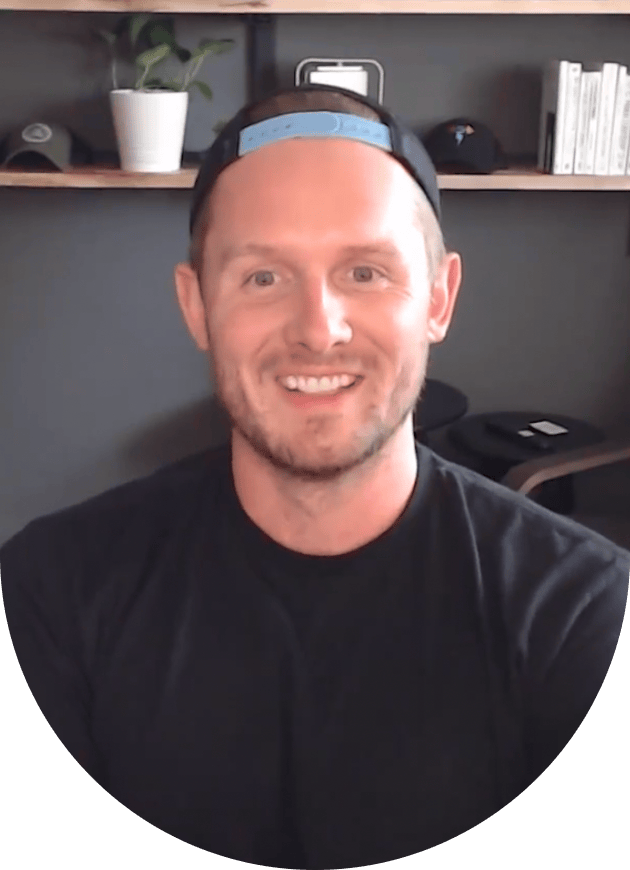
From Working IN Your Gym to Leading It with Ross Oberlin
Speaker: [00:00:00] 1, 2, 3, 4. Welcome to The Business for Unicorns podcast, where we help gym and studio owners create a business and a life they love. I’m your host, Michael Keeler. Join me and the business unicorns team each week for actionable advice, expert insights, and the inside scoop on what it really takes to level up your gym.
Get ready to unlock your potential and become a real unicorn in the fitness industry.[00:00:30]
Hello my friend. If you’re a gym owner with 30 clients or more, you may just be a few strategies away from adding five or $10,000 to your monthly revenue or more. So what we’re offering you is a free 10 minute call where we’ll help you get clear on what’s working. What’s not working and what’s possible for you over the next 90 days.
[00:01:00] And I’ll be candid, we offer these calls be because we know that some percentage of you might want our help actually implementing your plan. You might be interested in our unicorn society or leadership society. But regardless if you’re interested or not in getting our help, this call is a valuable call for you.
You will leave with a real plan for the next 90 days, and all you need to do is click the link down below in the show notes and schedule your call today. Hope to see you on one soon.
Hello, fitness business nerds. What’s up? Welcome to another [00:01:30] episode of the Business Unicorns podcast. I’m so excited to have on the podcast for the first time today. A long time Unicorn Sighting member, founder of RC Training and Fitness in Oak Park, Illinois. It’s Ross Oberland. Welcome to the podcast, Ross.
Speaker 2: Thanks so much for having me on. Keeler. I’m glad
Speaker: to be here. Matt, I’m so excited you’re here and you’ve been in Unicorn society for a while. I’ve always been such a big fan of your work ethic and your focus and your drive, and I’m so excited for you to share some of your recent lessons learned with our listeners.
So thanks so much for taking the time to do this.
Speaker 2: Yeah, I’m excited. Let’s make it happen.
Speaker: Yeah. First let’s just maybe [00:02:00] tell people a little bit about your origin story. Just give us like your three minute, how did you get started as a gym owner story?
Speaker 2: Yeah. Like so many people, you find such a profound impact in fitness and quality of life, and so I don’t think that part of my story is super unique where I found a calling and I.
Saw I could have an impact. And ultimately those steps led me to opening a, a gym RC Training and Fitness, which evolved in the very beginning from being one-on-one and you slowly get your feet under you. And I said, I want to have more impact and impact [00:02:30] more people. And we transitioned into the small group personal training model, and as I went along and started that business.
Even the RC is not my initials. RC stands for the roosters crow. And the idea is doing something that you’re proud of, doing something worth crowing about. And it doesn’t matter what other people think about it. If you find something that’s meaningful to you, yeah, and makes you proud and gets you excited, that’s what we want to have happen.
And so it was all about. Having an impact. Having a positive impact in our local community, and RC training and Fitness has grown. We have a really robust small group [00:03:00] personal training program for adults, but we also have a really great youth program and high school and collegiate athlete program that are run by like many businesses within our business, by some of our other coaches in their leadership positions.
And every single week, sincerely, on a weekly basis, we become, we polish or refine this well oiled machine and every week there are like measurable metrics. That we’re getting better at what we’re doing, which is a cool thing to witness.
Speaker: Yeah, that’s amazing. Good for you. Just to hear you talk with that kind of confidence about how your build business is managed and how your team is structured [00:03:30] is just so amazing because I know hard, how hard is to work to get to a place where your business is running, like any kind of machine, and so Absolutely.
Maybe we can, if we have time, maybe we can jump into, talk a little bit about the metrics and staff, because I know people listening to this will be like, wait, tell me more about that and maybe we’ll get to that. But there’s a few other topics we wanna cover. Thanks for that little back. Backstory. The first thing I wanted to pick your brain about was, I know in 2025 we’re recording this in January, 2026.
In 2025, you really doubled down on trying to level up as a leader.
Speaker 2: [00:04:00] Yes.
Speaker: And you really, I think you came to me in a coaching call. I figured how it started, but you really decided, leadership is something I wanna work on. I know I can improve. And you took on a few kind of projects that were really meaningful to changing your kinda approach to leadership.
Mm-hmm. And then you up. Being able to take some time away. So walk me through the story of one, let’s start with what made you decide that leadership was something you were gonna work on?
Speaker 2: Yeah. I think when I looked around the gym and that sort of common cliche line of working in the business versus working on the business and as I transitioned into that [00:04:30] role because I care about what I do and I think that’s a part of why I attract good people.
And so we have great employees and as we had this team come on, I realized. They are attracted to this gym and what we’re doing here because we really give a damn and we’re really trying to do something special.
Speaker: Yeah.
Speaker 2: And what I started to see was shortcomings in myself as a leader with being able to ru run communication.
Mm-hmm. Vacation efficiently within the business to give them clarity [00:05:00] on. How, what they were doing tied into the bigger mission mm-hmm. And all that sort of stuff. And I saw I, these people deserve it and these are the right people. The, I had, I have nobody, I have these awesome coaches and I need to step up myself as a leader to give them what they need to grow.
And I don’t wanna lose these people. And even if I do, this is what needs to happen next is I need to grow as a leader. So I double down. Did some calls with you. One of the things that came outta that was we worked on a 360 feedback review. Yep. [00:05:30] Which was a big part of that process, but it was more than just that.
It was really going into, I need to grow here to have the impact for my team to then vicariously have the impact to our huge gym community.
Speaker: It’s beautiful, Ross. I mean, it just shows the kind of humility that you’re coming to this with as a leader, that you know that I have great people and if they’re gonna thrive, I need to be on top of my game.
I need to be there to make sure communication is great. They have all the tools they need, they have the support they need, the training they need. Good for you. Maybe walk people through the experience doing 360 feedback. [00:06:00] ’cause some people may not even know what that is. So we just define what the process is and talk a little bit about maybe what you got out of it.
Speaker 2: Absolutely. So 360 meaning kind of full circle. And so essentially you’re looking to get feedback about yourself from the different relationships you have with people. I picked three parties. They were my employees, they were my gym members, and then they were a friends and family. Hybrid. Hybrid, more on the friend side.
So it’s three different kind of. Types of relationships that I have. And there was a questionnaire that was sent out that [00:06:30] has some general questions and I added one or two that were, I was specifically curious about. And one of the big things is, of course, you helped facilitate that for me, because it was truly anonymous.
I let everybody know it was anonymous. And I that I wanted and needed them to be completely candid and so I never went and looked through the feedback or anything. That was something that you were given access to and then you were able to give that report to me, which is a crucial part of it because truly sincerely saying that the anonymity is a part of it, really, I think, gave people the confidence to be candid with their feedback, [00:07:00] which is what I wanted.
Speaker: 100%. I’ll pause for a second just to say that this is a process that anyone listening can do, whether you have an external coach like me to help you go through it, or you just don’t look at the data until you’re all the way done. And if you do a survey where people don’t put their name and contact information in it, it’s anonymous no matter what.
So anyone can do this. And the kind of questions that were on your survey are questions. Questions like, I’m trying to think of some of the specific ones. You might remember them better than I do, but, but I think there were questions about like your leadership, about your [00:07:30] reputation, about your style and approach.
Like how comfortable are you bringing me negative information?
Speaker 2: Yes.
Speaker: How comfortable, you know what, what are some words you would say about me if I wasn’t in the room? Yes. Right. Yes. These kind of questions which really get at. What is your reputation amongst these three different groups of people? Because we show up differently for different people.
Yeah. And part of the reason that 360 is so valuable is like it’s to show you, look, you have different personalities, you have different ways of acting, different people. How do you leverage all the best versions of those in each of those categories? And so what are some of the things you walked away with after doing this [00:08:00] 360 review?
Speaker 2: Yeah, I think. For a lot of people. I wasn’t particularly scared, but I know a lot of people, the prospect of doing this feels a little scary. You’re gonna hear these things and they’re gonna make you not feel good feelings. Yeah. But I think what I experienced and what I think anybody likely would experience, ’cause if you’re doing something like this, it means that you care is you
Speaker: have to want to.
Yeah.
Speaker 2: The majority of it was positive. It was a lot of, it was a lot of highlighting my superpowers. Things that I ought to lean into more. And that’s not really what I went into it for is more is what are my weaknesses, what are my shortcomings? But [00:08:30] what I came with was a lot of understanding of my superpowers a lot better and how I can leverage them to have an impact with the people.
And then also, yeah, it addressed some shortcomings. There’s some places that I could give more attention if I’m being totally frank. It was some stuff. I probably had an inkling that was gonna come up anyway, even before, but it was really profound. But it’s not all negative. It’s not just a bunch of negative feedback.
Yeah. Either people, if you’re doing things for the right reasons, these people will feel that. And there’s, there’s some inspirational stuff in there that you can find out about yourself on the positive side of things.
Speaker: Yeah. I’m glad you’re [00:09:00] highlighting that, Ross, because I think people are often surprised how much positivity and good feelings they get from this sort of thing.
Yeah, and I’ve seen this even for managers and leaders who I know have really bumpy. Relationships in their lives, personal or professional. Even those folks who I, who really came to a 360 because they’re in a bad place with some, they still get some praise. It’s designed to give you a both. The process should be designed yes, to tell you like, what are my superpowers?
What am I great at? What do I need proofings on? And to know what you’re great at is just as if not more important than knowing [00:09:30] what you’re not great at, right? Yes. And so the fact that you’re walking away with confidence in your superpowers is fantastic. Good for you. When, when it comes to working on your leadership, did you ever communicate with your team that there was something you were doing?
Were they looped in at all to what you were working on?
Speaker 2: Yeah, I think. In, in the purpose of improving communicate. Mm-hmm. Being open. Right? Not only just having them be in that questionnaire and answer it, but to talk about it openly, Hey, here’s what I’m working on. Communication was one of the things that I wanted to work on.
It was one of the [00:10:00] things on the review that was, Hey, feedback slash communication could be better. And I think it was. Understanding. Hey, my job is to keep the whole team connected. Mm-hmm. So, of course a part of that was to be open about, Hey, what am I doing here and what am I trying to do? And how can you help keep me accountable?
Yep. And call me out and let me know because I’m your boss. I’m going to be giving you more accountability and more feedback, but that is absolutely a two-way street and I want, and I need it from you. And maybe in some ways it helped open the door even more. Mm-hmm. Doing that feedback form that now they feel more comfortable like.
He [00:10:30] really does want to know what I think or what’s going on and, and it’s just elevated the level of communication amongst the team as a whole.
Speaker: Yeah. Good for you Ross. I’m so glad you do this ’cause I think you did that because so many folks that I talked to, and I always encourage them to tell your team what you’re up to.
Obviously the ones that get your survey will know even more. What you’re up to, but not everyone might get it, but explaining to your team what you’re doing and why you’re doing it, why you think you, you leveling up as a leader matters to them, to the business. I think you’re right. Does exactly all those things.
It helps create a more transparent [00:11:00] environment. It helps build trust, helps ’em understand that you really do want their feedback. You do want feedback to be a two-way street. Yes. So good for you. I’m glad that you did that. I, I hope that. Made a difference in your relationships with your team?
Speaker 2: Absolutely.
Speaker: Yeah. Good for you. Anything else about leadership that I, I should be asking you about that I haven’t, we haven’t touched on?
Speaker 2: I think just the takeaways. We do the BFU retreat. Mm-hmm. Twice a year. Yep. And, and I was very honored to win an award, the Emerging Leader Award. Yep. At the last retreat we did in Denver.
And that happens at the [00:11:30] start of the retreat. So there are essentially two days where people have recognized, oh, that’s that guy that won that Emerging Leader award. And the 360 feedback was even mentioned there. So I had a lot of great conversations about leadership over those two days. And I’ll just say two main things came away when people are coming up to me as I referenced myself.
Sometimes if you’re wanting that just to figure out what you need to work on. Mm-hmm. ’cause you have an inkling, trust your gut, you’re probably already right. Yeah. And that’s probably the thing to work on and you can jump right into it. I think for me it was, and I had a couple conversations where I helped people identify that and they got Sure.
That place of [00:12:00] going, I already know what I Sure.
Speaker: You often know you where there’s a tension or friction or things that are like not really working fully Yes. In, in your work relationships and your personal ones also. And you have a feeling of what that is most of the time. Some. There might be some blind spots.
Yes, but I think that’s a really good advice. Start with the things that are very clearly issues that are on your radar already. Start there. Yeah. I love that. What else?
Speaker 2: The one other one was, I noticed a theme that these were all people, and of course BFU, the largest subset of that. It’s people who really care and are doing this because they found meaning [00:12:30] and purpose and significance in this and they want to have an impact.
But I’ll say categorically, sometimes those are people who are maybe a little too nice or are just nice as a byproduct of I’m not being a great leader, I’m not being clear to my team. I’m not giving them the kind of expectations and accountability they need. So I’m gonna offset that with just being really nice.
Mm-hmm. And so it’s not to not be nice or care about your people, but maybe if you’re focused or you’re putting all this energy into. Being nice or into being liked. A lot [00:13:00] of times what I found in those conversations was it was a lack of communication and clarity to your team and trying to offset it with that.
And so it’s like you’re a good person, you’re gonna take care of your people. Yes. You don’t have to put this to the top. Focus on being a good boss and leader, which. Being nice isn’t like the only thing there. It’s a part of a bigger equation and a lot of people found that. So I wanted to mention that if you’re a nice person, that sometimes is a little too nice.
Speaker: Yeah.
Speaker 2: The nicest thing you can do is provide more clarity and more structure, more feedback, more accountability [00:13:30] for your team so they know what they’re doing. They know what winning looks like and they know how to move forward.
Speaker: Yeah. Well said. My friend said, I often on this podcast will quote Brene Brown, and here’s another moment where she has a famous quote or mantra that she uses, which is clear is kind.
Right, and I think that’s just a yes. It so speaks to exactly what you’re talking about here, which is the kindest thing you can do as a manager, as a leader, as a coworker, as a friend, is be clear about your boundaries. Be clear about what you expect. Be clear about why you’re doing things, why you’re not doing things.
That kind of clarity is the kindest thing you [00:14:00] can do. I think people often have this, that there’s this myth that persists about management and leadership is that you can’t be liked as a boss or a manager and have. Clear expectations and bound and accountability, and it’s like you absolutely can have clear boundaries of your for yourself expectations for other people, and accountability for crossing those lines.
And if you’re really clear about that, you’ll actually gain people’s trust and devotion. Yes. Not lose it.
Speaker 2: Yes. I believe that once upon a time, and yeah, and confirm it [00:14:30] is not true.
Speaker: It’s not the case. It’s not the case. Yeah. There’s plenty of times where you have to make a decision as a boss. That is not a very popular decision.
Right. You might have to make some decisions where people will actively not like you for a little while. That is part of the job. Right. But on the whole, the more clear you can be, the more kind and efficient and trustful your relationships will be. I’m so glad that you experienced that in your,
Speaker 2: in your, yeah.
In your, yeah. It’s been a huge turning point in the. Success of the gym. It’s been a huge factor in that.
Speaker: Good, good for you. Let’s switch gears a little bit because I know you also have had a few [00:15:00] other wins lately. Yeah. And most recently was when you’re doing your annual planning, so I think it was in Q4 you were planning for Q1.
Yes. And your annual planning and you took a different approach. Maybe just talk to our listeners about what you normally do and what you did differently in in this quarterly planning process.
Speaker 2: Yeah, we, we’ve gotten better every quarter with running the BFU playbook. Mm-hmm. This awesome four quarterly planning and we use that structure.
But I think in some of the previous plannings we came in with just a lot of excitement about new quarter and [00:15:30] new ideas and new things and what’s all the awesome stuff we’re gonna do. And we threw it all at the wall and we picked out the stuff that was the shiniest and looked the most fun and, and gravitated that way as one does.
And the problem was it was always taking on new things or new ideas or changes or additions, this sort of theme. And when I sat back and reflected because we’ve been doing a better job with tracking our metrics and understanding our numbers and giving the gym its own voice in this context, [00:16:00] I decided to come into this Q1 planning meeting and I said, Hey guys, the theme for this meeting is no new ideas.
Speaker: Wow.
Speaker 2: And we’ve got a big stockpile of stuff we want to address. It was largely about, we are doing so much right now and there’s so much kind of tightening of nuts and bolts and screws and polishing and bottlenecks and automations. There’s so much with what we’re already doing that we can clean up and improve before we take this next quantum leap forward.
Let’s address this and feel really [00:16:30] confident about what we’re doing right now, and it was actually really well received and everybody appreciated that. Every individual leadership role didn’t have to do something new and rather got to tighten up or clean up something they had. Not just myself, but the entire team.
Speaker: Yeah, I love that. I love that Ross so much and what a bold move to go into a, a meeting like that and really set the agenda like that, I think is a great example of really listening to what your business needs and leading your team in that direction. I also love the phrase you used, what you, what do you call it?
Giving the business like a voice of its own.
Speaker 2: [00:17:00] Yes.
Speaker: Yeah. I think you’re right. When you really are looking at like the, the. The metrics and the flow of your business, the things that are working, the systems that are working or not working, the metrics that are on track or off track, the business will tell you what it needs, right?
If you’re really looking at those things, it does have a life and a voice of its own. And if you’re really learning to reading, learning to read those tea leaves, right? You will understand what the signals are. But I love that you went in with this approach, which was really, let’s not, let’s do less but better.
Let’s do, instead of doing more, let’s do it better. [00:17:30] And I think so many people probably need that quarter to have a maintenance quarter,
Speaker 2: a cleanup quarter.
Speaker: Yes. We,
Speaker 2: we have grown, we have taken on different initiatives. All this great stuff has happened. It is, you know, that should happen. That’s how a business grows.
Yeah. But naturally it’s going to stress or strain systems. As you build a business, you have to, as you’re juggling or spinning a lot of plates, you have to look at, like your onboarding process. Say, that’s not great, but it’s definitely good enough now. And rather than tinkering this and trying to bring it up the last 5%, I need to build this next system that doesn’t even exist.
Speaker: Yep.
Speaker 2: But [00:18:00] once you have stuff in place, yeah, you should come back and close that bit out. So what are
Speaker: some of the things, what are some of the things y’all are going back to and cleaning up this quarter?
Speaker 2: Yeah, so onboarding is one of them and tightening up, we’ve got some different roles. People are taking on newer responsibilities as they are leveling up, as my team is leveling up within the business and taking on more.
And so as different people are having different roles and responsibilities, we’ve been able to look back and say, there’s an inefficiency here. We can clean up this communication path. Mm-hmm. We can clean up like who owns this? And that [00:18:30] whole process has been phenomenal. I’ll give a quick shout out here.
I think I need to, to mission control meetings. Uhhuh. We’re now running them, not some modified, we’re running them truly, again to the BFU playbook, but it is allowing for other members of my team to have even more of a voice and to. Really talk about the things that they’re seeing. I’ve, in the past it was too much of me just dictating stuff to the team.
There’s these real collaborative conversations because it’s not Ross’s new [00:19:00] ideas we’re working on where we’re always defaulting to my ideas. It’s, Hey, I’m an expert on this stuff we’re doing right now, and I’ve got some thoughts on how we could improve this. And so it’s been a really cool. Collaborative effort amongst the team.
Yeah,
Speaker: yeah. Good for you. For the listeners who don’t know what our weekly mission control meeting is, it’s basically a week, a weekly leadership meeting where we look at the key metrics of the business to see whether they’re on track or not. We look at the projects we’re tackling each quarter to see whether they’re on track or not, and we look at the a list of what we call issues and opportunities, and we see what are the things that are needing up.[00:19:30]
We need to be addressed right now ’cause they’re not working. And what are the ideas we have we can try and implement right now? Because there are great opportunities and that’s the kind of main, the main things we cover in this weekly meeting. But it’s highly structured. It’s just the kind of leadership level of people on your team and when you get it, when you do it right, when you get a into a rhythm with that, it really does exactly what Ross mentions and empowers your team to show up at this meeting, like real experts in their part of the business and really contribute in ways.
Maybe they weren’t. Before, and when you get your full team on that same page, it really does create this [00:20:00] engine of leadership that drives things forward. I always say that our weekly mission control meeting is like the pulse or the heartbeat of the business. It keeps things moving forward, pushing forward every seven days.
And so for you listeners who don’t have something like that, I encourage you to implement something like that. It’s something you don’t, you certainly can join. Bits of unicorns, and in unicorn society we have playbooks. They’ll tell you how, but also there’s plenty of resources online. So even if you’re not joining us, go Google.
There’s an EOS version of it. The entrepreneur operating system has one called the L 10 or the Leadership 10 meeting. Go [00:20:30] Google those and try and follow those instructions. Because I just think it’s such a game changer for all business owners, not just gym owners, to have that pulse with your leadership team.
Yeah.
Speaker 2: Yeah. And
Speaker: go ahead.
Speaker 2: To bring it back, because you mentioned, we talked about the gym having a voice, like that’s a big part of this meeting. Yeah, and I think a part of what’s helped us so much, there’s, we, we look at the dashboard, we look at the numbers, and we go with what we’re witnessing, observing.
To some extent, it’s anecdotal. I talked to the team. I explained it to them is, Hey, if we feel a certain way, we’re going [00:21:00] on vibes.
Speaker: Sure.
Speaker 2: We need to then cross reference that with the actual numbers, the data. Yeah. And make sure that syncs up. And it’s not just us overreacting one way or another to a single instance of something that we witness or observed.
We can look at the bigger view. And so it like. Not to tie it all together, but that’s where that comes through in the most profound way.
Speaker: Great. Yeah, I mean in, in emotional intelligence models, we call that a, that skill, we call that skill reality testing. The idea that we have feelings and vibes about how things are going, the [00:21:30] stories we make up about people and places and how the business is going and what that, what’s up with that client.
We have all these stories we tell, but to reality test those ideas, we go to look at some data, we go look at some. Qualitative quantitative data that we’ve collected to say, okay, does the story, I have the emotional story I’m telling about this thing actually track? Do other people see it? Is there an actual pattern there?
Am I just making that up? Is it that severe? Was it just one loud person who complained about that? Or have there been consistent complaints over months about that? And I think [00:22:00] going to look at the data as a team every week starts to help you all. Develop that skill of reality, testing your assumptions with actual facts, and there’s such a, such a great skill to have as a leadership team.
Speaker 2: 100%.
Speaker: Yeah. Good for you. I know we have just a few minutes left, and I know that it came up a few times, both in your intro and I think in both of your examples, what you shared, this idea of metrics being so important in all the things you’ve been talking about. Can we just talk about some of the key metrics that you track and some of the ones you look at the most frequently to help you keep your [00:22:30] finger on the pulse?
Speaker 2: Yeah, absolutely. I think f for us it’s using them to identify where, where in the pipeline maybe so to speak, would we need to address, right? So from the start of how many leads mm-hmm. We’ve collected, how many sales conversations we’ve had, how many kickstart sessions, that’s where, that’s somebody’s first step into the gym, how many kickstart sessions we book, and.
People show up to. And then also on you, right? Getting people in. Where are we missing? Is it, are we struggling to convert? Are [00:23:00] we not capturing enough leads? And so we can look at which, where the weak point is, but also then on the retention side of things, we can look at how frequently are people showing up to the gym?
What’s our session utilization? So how full are our sessions? And again, looking at those numbers and, and. Again, because we’re looking at it on a weekly pace. If something does start to dip or trend down, you can catch it in just a week or two.
Speaker: Yep.
Speaker 2: And address it. But you also can zoom out and look at the bigger picture and not panic, but essentially we’re able to look at the stages of bringing [00:23:30] somebody into the gym.
Identify a weak point where the numbers drop off and okay, we need to give more attention there. And then same thing on the retention side. So once they are a member, how frequently are they showing up? How many sessions do they come to per week? All How responsive are they to X, Y, Z thing?
Speaker: Yeah.
Speaker 2: And again, that’s gonna give us a look into what do we need to address to.
Retain the members that we already have.
Speaker: Yeah, said Ross. I think it’s a beautiful list of, I think, really key metrics everyone’s gotta have, right? The kind of sales funnel and the kind of like retention journey that your clients are on. You gotta know, you gotta get your finger on the [00:24:00] pulse of that. And I think that for me, and help me, this might resonate with you, but for me, the magic of tracking your metrics really starts to become even more magical after you’ve been tracking the same metrics in the same way for a few years.
Speaker 2: Oh my God. Yes.
Speaker: Because then you can really look back historically and say, okay, how did not, how we not just, can we do better than last month, but can we do better than this month last year? Yes. Or this month, over the last two years or, and start to see real seasonal trends, et cetera. And when you start to have your data.
Available and accessible and [00:24:30] consistent like that to you, then you really have a, a, a great tool for forecasting and budgeting. You know, have a great tool for understanding what the ups and downs might mean and what you could do about it. Yeah. Have you read, noticed that as well?
Speaker 2: It’s, so this is late January, so of course when I’m out and about and, and I’m a, I’m also a wrestling coach with our local high school, so.
A tournament I saw a parent I hadn’t seen in a few. Of course, the question, knowing that I own a gym is, boy, you must had a ton of people coming in on January 1st. And in boutique fitness, that’s usually [00:25:00] not quite like the bump. I, and I told ’em a lot of times, January 1st, a lot of people are going, I’m gonna do it myself.
And what we’ll see is a couple weeks later, right about now, yes, we see this big swell and through February it’s when people realize I need better support and whatever. And I could confidently say that. I can look at what the last few years have been and that hey, we live in an area where it’s a lot of families.
And so through the holidays they’re gonna be super busy and there’s gonna be a buffer of a week post New Year’s where they’re just getting their feet back under them. And then they’ll get a little more [00:25:30] intentional about maybe something like joining the gym. And so we don’t panic when we see this. Dip right at the holidays.
It’s the normal we see, but we see this return and yeah, you can ride that wave, you can not panic and you can see the bigger picture there.
Speaker: Yeah, so, so that’s really awesome. Lemme finish, I thinking, last question for you. So clearly we’ve talked about all these ways, all these ways that you’ve leveled up both in your leadership and how you’re managing your team and how you’re tracking and using metrics to make sense of your business.
And so for anyone listening who’s, yeah, I wanna spend time [00:26:00] leveling up, but like where do, how do you find the time? Like how do you. Organize yourself in a way that gives you time to, to do this kind of stuff. And so can you just talk a little bit about how you’ve been able to organize your time, attention and focus to be able to work on the business, to work on, not just in it, but on it this consistently?
Yeah. Is that question clear? How, talk a little bit about how you’ve designed your week to give you the time and attention and focus to work on yourself and on your business so directly.
Speaker 2: Yeah, I, one line that kind of comes to mind [00:26:30] and it’s a journey is a gym owner. So if you’re coaching a ton of hours right there, there’s, the challenge is a little higher.
Yep. And I’ve gotten myself to a place where I’m not, but the term that I heard many years ago, that’s come, that kind of pops into mind as you ask that is lifestyle by design. Mm-hmm. And that’s all to say that I love this business and I love this team and I want it to grow. I’m also married and I have three kids.
Mm-hmm. At as, as, as precious as anything could possibly be to me.
Speaker: Yep.
Speaker 2: And. If I can take the time to sit and reflect [00:27:00] back and look at what matters to me and what’s important. I feel that alone puts me in this mindset of, it requires me to be very intentional.
Speaker: Sure.
Speaker 2: And then not to give very a vague answer to that, but just to sit down and be intentional about my time.
I don’t wake up in mornings wondering what I’m gonna do. I have a lot of intention of. How it’s structured and I wave my days. I have really heavy days where I’ll work crazy, not crazy. I’ll work really long hours and then other days where I’ll really pull back and I’ll be more present with my family and my [00:27:30] kids.
I’m probably doing and getting more work done now than I ever have before. I’m working like harder doing much, but I am less burnt out than I’ve ever been because of. Clarity to it. I’ll say one podcast episode that y’all recently did that I thought was helpful here, especially for me as somebody who has historically has struggled with managing their time and themselves and everything is episode 5 0 9, which I think just came out like a couple weeks ago.
Spoke to me, I felt like it was for, it was an episode that was for me a few years ago, [00:28:00] essentially. Yeah. And really covers a lot of the tactics of organizing oneself. So if anybody is in that realm of. Maybe not the best with time management and things and fool around. I was very much that person too, and I felt like episode 5 0 9.
Boy, get it, hit the nail on the head It, I felt like it was speaking to me. And so that’s my advice is anybody who needs that episode 5 0 9 is where you ought to go.
Speaker: Yeah. Thank you for that. We will definitely refer people to it down below in the show notes. And the key word that stood out to me that I think is the real differentiator is how [00:28:30] intentional you’ve been.
Yes. Because all too often, and there’s a lot of research that supports this, that we spend sometimes more than half of our day on autopilot. Our brain loves shortcuts. Our brain loves patterns. So if we can get through the day on autopilot, we will, and our brain will like that. And on autopilot, we’re not necessarily being as intentional with what gets our time and attention.
And so the fact that you have a process in place to plan and make sure that your day is designed. In a way that helps you center your priorities and push aside [00:29:00] distractions. I think that’s the kind of intentionality that that helps people get more. More done. Yeah. So good for you. I think that’s so smart.
I think that’s really good advice for our listeners and go listen to that, the podcast episode, because I think it does give a few more tips and tips
Speaker 2: seriously, if you struggle with any time management, execution, anything. Go listen to that episode.
Speaker: I love it. Awesome. Thanks so much again for doing this, Ross.
We could go on all day because I know there’s so much great work that you’ve been doing and I’m sure we’ll have you back again soon on the podcast and talk about the next successes you’ve been having. But it’s been so great to have you in Unicorn society. I hope we get to work [00:29:30] together for many more years to come.
And Dr. Your listeners, I hope you found this useful. So thanks again for your time, Ross and listeners, I’ll see you on the next one. Have a kick ass day y’all.
Speaker 2: Go.