




- Business For Unicorns Podcast
Jesse’s Gym Grew While He Was in Greece (Without Burning Out His Team)
[00:00:00] Welcome to the Business of Unicorns podcast, where we help gym and studio owners create a business and a life they love. I’m your host, Michael Keeler. Join me and the Business of Unicorns team each week for actionable advice, expert insights, and the inside scoop on what it really takes to level up your gym.
Get ready to unlock your potential and become a real unicorn in the fitness industry
Hello, my friend. Michael here. Did you know that you can get 30 minutes of coaching with someone from the Business Unicorns team with no strings attached? If you’re a gym owner with 30 clients or more, you might just be, like, a few strategies away from adding five or $10,000 a month to your reoccurring revenue or more.
This is a totally free call, and what we’ll do [00:01:00] is we’ll help you get clear on what’s working in your business right now, what’s not working, and what’s possible for you in the next 90 days. And in case you’re wondering, we are offering these calls because we know that some percentage of you will want help implementing the plan that we develop on this call.
But even if you never decide to work with us, that’s okay. You’ll get a ton of value out of this call. All you need to do is click the link below in the show notes, and we hope to see you soon on a brainstorm call. Hello, fitness business nerds. What’s up? Welcome to another episode of the Business for Unicorns podcast.
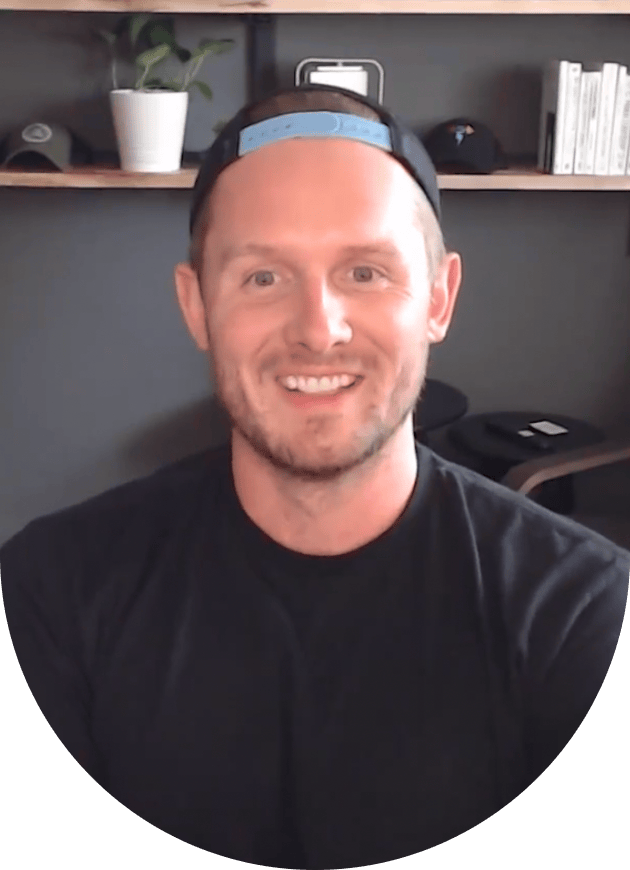
I’m having someone on the podcast today who really should’ve been on a long time ago. I even had a memory that he’s already been on, but today we’re making it happen for real. It’s Jesse Medlin, who is the owner of River City Strength in San Antonio, Texas. Been a Unicorn Society member for years, is a leadership society member, has been absolutely crushing it.
I’m just so excited to have him on the podcast today to share his story and all the things he’s been doing well to grow his business so you all can steal his ideas. Jesse, [00:02:00] welcome to the podcast. Yeah, thanks for having me on today, Caleb. Oh my gosh. I’m stoked to hear myself on the podcast. I know. What a treat.
Thanks for being a listener, first of all. That’s amazing. And I know I was- genuinely just said this to you before we started recording, I was like, “Jesse’s clearly been on this podcast before. We must have had him on,” and I just can’t believe we’re doing it now for the first time today, so I’m so excited to have you.
Maybe just first just give people a little bit of a background story. How did you come to be the owner of River City Strength in Texas, and just say a little bit about your origin story? Yeah, started off as a strength coach. I thought in my head that I wanted to follow jobs around the nation and coach college kids in athletics and stuff.
And then I realized that maybe relocating my family every couple years wasn’t the best thing. So got into gen pop personal training, stuff like that. Did that for seven years, and then the whole goal was to always have my own gym, and just thought I could help people my way. And here we are. I opened up in 2019, and yeah, we’ve been going ever since.
Yeah. That’s amazing. I know we- we’ve been working with you all, you for a few years now, and even just before this podcast, you updated me on some of the [00:03:00] amazing growth you’ve had. You said that since we started working with Business Unicorns, your personal take-home pay has grown by 10 times. You’ve 10X’d your personal income since working with us, which is incredible.
Your reoccurring monthly revenue has been up over 40K since we started working together. I think you put up almost 120 members, I think- Mm-hmm … and 30% year over grew, year over year growth, which is insane. Anyone listening to this podcast will be jealous and envious of those stats. But I’ll, I’ve had a front row seat to watch that growth happen at, at your gym, and I can say that you’re someone who consistently puts in the work.
Before we even talk about all the great things I know you’re gonna share, I wanna share what I see as being your secret sauce, is that every time we’re on a coaching call, you’re like, “Yep, I did all the things I said I was going to do.” Yeah. Every time you make a plan, you execute. And if you don’t execute, you at least tried it and made a pivot and made a new plan, right?
Right. And it’s that kind of persistence, honestly, Jesse, that you might not see in yourself, but I can tell you is so rare from entrepreneurs. Oftentimes they’re pulled in lots of [00:04:00] directions, but you have been so steady and consistent, putting one foot in front of the other, doing the damn work. So I just wanna say congratulations on that.
Yeah. And for all you listening, that is what it looks like. If you wanna 10X your income, that, you gotta put one foot in front of the other every single day and focus on what matters most. Thanks for letting me shout you out a little bit before we jump in here. That’s okay. Just before, before we get into the s- specifics, maybe just say a little bit about what’s this growth been like for you?
What’s the experience of being a owner of a gym that has grown and gotten so much more financially successful over the last bunch of years? What’s that feel like? It’s fantastic, and I think that’s something I shared with you, is my wife and I, we’re actually, we just put in a contract on a house, so hopefully- Amazing
when we hear this, we’ll be in. But- Amazing … but it’s stuff like that, and I think that not only that, but also being able to provide for my team. I’ve spoken with you guys, the biggest thing is being able to support the guys that have been here with me, and coaches, and things like that, in a way that I think is not normal in our industry.
Thanks to y’all, we’re able to have a [00:05:00] 401match with my- with the employees and we’re- healthcare, things like this that ar- aren’t normal. So that’s what I’m most proud of. Yeah. In terms of the take-home revenue, like I might’ve shared with you, the, the 10 times where I was. I don’t even know how I got by on before I hired you guys, so-
uh, yeah. That was- Yeah … that was kinda eye-opening. And yeah, I think that’s the big thing. Yeah. I think just speaks to the kind of leader you are, that after all this amazing success that you’ve helped create, the thing that you turn your attention to the most is taking care of your team. And I think that, that pays off.
It means you attract great talent, you keep great talent, you got great vibes in the gym that the clients love, because you really do give a shit about taking care of your people, and it shows. It really shows in the results. So let me just go back to maybe when you first found us. I know, I think you followed us, or found us ’cause you were following Pete on Instagram, so- That’s right
shout out Pete Dupuis for bringing us Jesse. But maybe just talk… You mentioned that before you started working with us, your biggest challenge was just you weren’t sure how to spend your time. So take me back there to before you started working with us. [00:06:00] Tell me about what your days looked like when you weren’t sure how to spend your time.
I think it was like, like most small business owners, you’re just doing all sorts of things, right? You’re wearing every hat, and you’re not sure because there’s only so many hours in the day. Yeah. You’re not sure if the things you’re doing are actually the best things to be putting your time and energy towards, right?
Yeah. And we were- I was doing stuff like, I remember, this is before Instagram had captions, so I’d have to go in and plug in the captions myself. Mm-hmm. Took forever. In hindsight- Yeah … was it the best or worst use of my time? I don’t know, but I spent, like, 15 hours every week doing it. Yeah. Yep. So I think that’s the thing, and then also just kinda having a game plan.
Something you guys do is really kinda help steer, give me the, guide me on the best path and, like you said, holding accountability of making sure when we check in, it’s like I did the things I was supposed to do to kinda get the business moving forward. Yeah. I think what you just said, Jesse, I think resonate, will resonate with a lot of people listening.
I know it resonates with me, that sometimes when you wear all those hats in the business, it’s very easy to spend all your time, really well intentioned, on like the wrong shit, right [00:07:00] Yeah. Right. And just spend half your week on Instagram captions. It just feel, in the moment it feels like I’m the only one who can do this.
It just takes time. It’s a good investment. But it’s, it really takes often something like a conversation with a coach or another gym owner to help you zoom out and say, “Is that really how I should be spending my time?” Yeah. So as you started to get clear about that, what did you learn were the most important things for you to spend your time on?
I think the, in, around the time that y’all c- you guys came into my life I was- Mm-hmm … it was something about building systems, right? And figuring out what’s the best way to utilize the people around me. Mm-hmm. Like we’ve referenced, like the team, the two coaches I’ve had since forever here- Yeah … have, we didn’t really have the amount of money to be able to pay them enough to be able to put in all the work.
So a lot of it was figuring out, like, almost like you, having y’all in my corner gave me permission to understand, like, this is worth this much. Mm-hmm. And if they do this, it gives you time to do other things. And long term- Mm-hmm … that’ll create more opportunity for everybody involved. Yeah. Yep. So that’s something- Yeah
that’s, that you can’t really replace that peace of mind [00:08:00] and having the, I guess, the confidence in knowing that what you’re doing is the right way to do it. Yeah. That makes sense. That makes sense. It’s a reason why a lot of people have coaches and mentors is to, just to get validation that, okay, how I’m spending my time, what I’m working on, the systems I’m building make sense.
And I think you, this is what I, I meant earlier when I said you just were so good at putting one foot in front of the other, is that you really spent time to build systems. And I think some people get really impatient there. I see it all the time with people who join Unicorn Society. For the first month or two we’re teaching them, like, systems they need to in- input in the business, and they get…
And it doesn’t often have an immediate payoff, right? ‘Cause you’re investing in building the processes, the SOPs- Right … sometimes the software infrastructure. And those things help give you leverage so you can do more with less of your time. Those systems work when you’re not working, right? And s- Sure … and you never lost sight of that.
I think every single chance you got, you put in systems that helped leverage your time and help grow your team. Maybe let’s focus on that part a little bit more. So talk a little bit about the first [00:09:00] few steps you had to take to grow your team and get them to the place where they are today. One of the, one of the most powerful things I think that we have with y’all is access to information specific to our industry.
Yeah. What w- with, I was reading all sorts of business books and leadership books and things like that. I was reading about, books about restaurants and big box gyms and things like that, but what do those numbers mean specifically to me and my business, right? So how can I… What’s the scorecard read and what’s the, what’s good?
By understanding what you guys give us, metrics to track and understand these are the things that are important, these are things maybe aren’t that important. Yeah. And by focusing on that stuff, focusing on that stuff, then you’re able to make sure, like you said, doing the small things to, towards the bigger path, right?
Yeah. I think the SOPs, having in place, those are huge. I just got back from a vacation in Greece for two weeks, and the gym grew, and there were no fires. And some- Wow … of the small things that happened, the team took care of. I didn’t even know, and that’s because of the structure and the SOPs and things like that.
Yeah. That’s amazing. Good for you. I also want to hear more about your vacation when we’re done recording this podcast. But that’s incredible. [00:10:00] Yeah, I think that it’s a perfect example of when you inve- take time to invest in all the systems your people need to do their jobs well, then they need you less in a delightful way, right?
In a really positive way. That’s great. So I know another thing that r- really made a big difference, in addition to having access to the right information and the right tools for your bus- for your business, another thing that I know I’ve watched you do really well, you started to take seriously meetings, and started to really wrap your arms around, consistently around some key metrics, some KPIs.
And so let me just start with the first one. Can you just talk a little bit about the core meetings you have in place that really help drive the business these days? Yeah, so we have our weekly leadership meeting, and that’s been huge, and we w- the first time we did it exactly the way that y’all told us to do it, and it was ugly and messy, and I was like, “Hey, guys, look, I’m gonna mess this thing up.”
Love- I’m trying really hard not to curse right now, but- … I’m gonna mess this thing up. So- That’s okay. I do all the time. Yeah. That’s okay. They just stick with it. And then I think also speaking to that is one thing as well that y- we offer in the team that [00:11:00] you guys have is that we’re… Because my other coaches, Danny, Marco, and Erin, they see that I’m talking to you, so it’s not just something that Jesse made up, and we’re gonna try it now.
It gives it- Yeah … a little more, like backing and a little more- Yeah … buy-in, and it makes everything so smooth and easy. So yeah, so for us, our le- our leadership meetings, they happen every Wed- or I’m sorry, every Monday at 12:30, we just changed the time. And it’s, and it gives us time to check in and see what it looks like, and from give them idea of hey, these are the numbers, this is how this plays into the overall health of the business.
This is how that plays into what you guys are doing. So they know if what they’re doing is successful and meaningful. Yeah. Um- I think that’s such an important part. If you want a team that has any level of autonomy, you need to teach them how to think about their performance and how their success. And if you have a, a relatively small team like you do, inviting them to this weekly kind of leadership meeting where we all work on the business together, and you show them the results of their efforts, right?
If they’ve been asking for a lot of referrals, you show them how those referrals are coming to the business and converting or not, and impacting the bottom line, right? And the more you teach them [00:12:00] how to give themselves that feedback, the more you create that feedback loop with them, the more autonomous they can be.
And I think your team has clearly grown so much over the last few years because you’ve given them all these tools to learn how to impact the business more effectively. So you got this weekly leadership meeting where you all come together and talk about the metrics and your projects. And I think I actually recorded a podcast recently with my friend Stuart Aitken, which I think we w- we published.
So if you’re listening to this podcast now, there should be a podcast I recently recorded about this weekly leadership meeting. So go find that. Maybe Rosemary can, our producer, can link down below. But say more about what other meetings do you do? Any… So it’s, you have this weekly leadership meeting.
Anything else you do to keep your finger on the pulse of what’s happening in the business? Yeah. So we, I have one-on-one meetings with everybody. The, how often those happen changes based on who it is, right? So with Coach Erin, who’s our member experience coordinator, meet with her every single week. I know what’s going on with everyone, what’s the billing look like, where’s, where’s everything going, that kind of thing.
Yeah. Retention. And Coach Danny, he’s in charge of the product on the floor, so he makes sure [00:13:00] that all the coaches are executing the way that the coaching experience should be. He meets with everybody one-on-one as well. And that was a huge help for me because then it, it meant that my meetings with the coaches can be less about what- how are you coaching this exercise, and more about what are the things I can do to best support you- Yeah
and make sure that we’re on the same page in terms of what’s your growth look like, what would you like to be in three years- Mm-hmm … and how does that fit within the role you have here in the gym? Yeah. I think that’s so s- so smart, Jesse. I think whenever you can have a person that’s a head coach role and they can focus on the day-to-day coaching, making sure people are doing a good job on the training floor, then it really frees you up as a owner to focus on just taking care of your people.
Focus on their long-term learning and development, focus on their career goals, focus on how to empower them with skills that help you, help you help them grow the gym. And so I’m so glad you made that leap. I think all too often gym owners I talk to just don’t have a consistent pulse for meeting- Mm-hmm
one-on-one with their people. And I think if any of you listening want the kind of, you know, growth and success Jesse’s had, you really need to have those consistent rhythms [00:14:00] with your people to stay on the same page and to make sure that they’re getting what they need to feel like they’re valued in your- as, as an employee.
Yeah. So that’s a little bit about meetings. Talk to me a little bit about how your relationship to metrics and KP- or KPIs has changed over the years. So it’s gone from everything to where I was tracking nothing, and then I was like, “Okay, what’s the bank statement? Cool. Okay.” And now it’s re- then I went to tracking all sorts of stuff, which thanks to y’all, you helped me whittle it down to the things that are really important, right?
So instead of having a giant dashboard of all these metrics that I didn’t know what the hell they meant, now I have actual things that I know, like, hey, these are the 15 numbers I need to track, and make sure that within this, this gives me the health of the business. And then on top of that, like knowing, okay, what is that compared to industry standard?
What is that compared to the top 10% of other gyms like mine? What is it compared to myself last year? All these things. But now that I’ve been tracking with y’all for so long, I can track, okay, f- specifically for us, our Aprils are really good. So I know, okay, we should have this kind of success in April next year.
It gives me so many things to be able to [00:15:00] compare myself to and understand am I actually making progress, right? Yeah. I think that’s so well said, Jesse. I think the number one thing I hear from gym owners, and I think anyone listening will agree with this, is they, everyone just wants to know, “How am I doing?”
Or, “Am I doing good?” Like, how… And I think in all the things you mentioned there, now you have data. We give all our members data that allows you to compare to some industry standards. You’ve been tracking for a while. You can compare to yourself and your own performance over time. There’s lots of benchmarks we have that you can use to say, “How am I doing?”
And we don’t always wanna be comparing ourselves to others at all times. But when it comes to key metrics, there are some real things that we know work. There are some real ranges of all the numbers you wanna track that really tell you whether or not you’re on track or not. And so the fact that you have that now gives you real peace of mind.
A place where people sometimes get hung up on tracking key metrics or KPIs is they get hung up on just the mechanics of getting the numbers every week and putting them into a spreadsheet. Can you just talk a little bit about how you’ve gotten better and better at that over, over time? [00:16:00] Just by doing it every week.
Yeah. I think- That’s part of it. Yeah … yeah, just prioritizing it, understanding how to, where the numbers come from, and how easily to plug them in. And also like now we’re at the point, like I mentioned the team, like I’m not the only one that updates like our metric dashboard, right? So- Yeah … yeah, we have, we built out like a little organizational chart that shows, okay, where’s everybody within the business?
What are the numbers they’re responsible for? And that even, again, takes more time off my plate, but it also gives them more information as to the health of the business and how important their role is. Yeah. I think so often like people see employees as, “Hey, we just need to give them more money.” But really it’s making them feel important in terms of the, the overall health of the, the thing that they believe in, right?
Like in, in- Yeah … helping people through the business or whatever it can be. Yeah. Listen, Jesse, this is what help, this is what makes you stand out as a leader. Like, you really get the fact that your employees don’t just want a paycheck. Yeah, are there some people out there in the world that just want to go have a paycheck and go home?
Maybe, right? But I actually do think most humans, most of the time, they want a sense of purpose. They want to feel like [00:17:00] they’re contributing. They want to feel like their contribution matters, that their opinion, their voice, their skills are mattering to help people. Most people get into this business because they want to help other people.
This is a helping profession. And so the fact that you’re helping your team, yes, do great work with your clients, but also do great work on behalf of the business. They are– They own certain metrics and KPIs that they are responsible for reporting on and driving in the business. And I think a lot of owners are really nervous or hesitant to give their team that kind of responsibility, or they just assume they don’t want to do that.
They– It would be too much for me to ask. They just want a paycheck and go home. And I just say, if you have that kind of team and everyone on your team wants a paycheck and go home, you’re doing something wrong, right? I think you need to have at least some people on the team who really want to be there and contribute and grow and, and you really found and cultivated those folks.
Maybe give just a few quick examples of how you’ve divided those roles on your team and what kind of KPIs they’re responsible for. Yeah. So like I mentioned that Coach Danny’s in charge of [00:18:00] program design- Mm-hmm … making sure the product we have on the floor is good. Which since he’s been doing that, injury rates are so much lower.
They’re non-existent now, so because he has time to really focus on that thing. And when I was trying to do everything, we’re like, “Oh man, people’s elbows are kind of hurting them. What are we doing wrong?” kind of thing. Yeah. And speak to our model, so we do eight-on-one. Everyone has their own program, so it’s a lot of programming.
Yeah. So he does that, and because of that, he’s able to check in on, like I said, like he has one-on-ones with everyone. We’re talking about, “Okay, this is the exercise we’re doing. I’m seeing a coach like this. Make sure we coach it like that. Are we progressing people appropriately?” Those things, and that’s completely off my table, right?
Yeah. Um, and then Coach Erin, she’s the member experience coordinator. She’s retention. She gives us metrics on who’s in their LBO, who’s in their first 90 days, what does onboarding look like. We do a ton of outreach in the first 90 days, and it’d be impossible for me to do that. She texts everybody on Sunday, lets them know the schedule.
If they’re not on the schedule, she’ll text them Monday. She changes billing. She does all that stuff. And I think that’s something that members really appreciate because it almost [00:19:00] feels like we’re just have our arms around them all the time, and that’s something that would be impossible if it was just me.
Yeah. So, yeah. I, that, that’s just, just a perfect example of h- of how you having these team members really have real ownership of these areas of the business keeps them more engaged and gets them excited to come to work, but also really takes a lot off your plate so you can focus on growing the business.
You can focus on taking care of the team and getting more people through the doors, which is really often at this stage what the owner needs to be the number one focus. That’s great. A few more questions that we have time for here. Let me just ask you this. Of all the things we talked about here today or things we didn’t talk about, what do you think are the things that have made the biggest difference in the gross- growth you’ve seen over the last few years?
What do you think are the biggest pieces of leverage that our listeners really should pay the most attention to? I think it’s having, holding your, yourself and your employees to a high level of, of accountability and responsibility, right? I think one, one thing that I read somewhere from a book that I probably got from you guys but that nine, nine times out of 10, people will live up to the expectations you have for [00:20:00] them- Mm-hmm
regardless of what those expectations are. So I think if you just have a high expectation of yourself and your employees, 9 times out of 10 they’re gonna live up to it. And I think that, and I’ve had conversations where it’s, you try to believe in them and push them to do what you know they’re capable of, and that’s okay to give them t- a little bit of uncomfortable, kind of stretch goals a little bit, and giving them things like that really pay off in the long run.
Let them know that you believe in them. Just like we do with our members. We give them a little bit of stretch, just a little bit more weight, just a little more reps, things like that. And I think that’s applied through all things. Yeah. I think that’s really beautifully said, Jesse. That might be a great place for us to leave the podcast today, ’cause I think that’s great advice, right?
Which is just really in- invest in those folks and stretch, stretch them a little bit, right? Yeah. Set a standard that’s higher than the floor, right? And they’re gonna, no matter where you set the standard, they’re gonna meet it, and I think that’s a really great way of thinking about how to challenge yourself as a leader, and in turn, how to lift up your team and make sure that they’re growing right alongside you.
So good for you. Let’s leave it there. I’m excited to have you back on the [00:21:00] podcast in another six to 12 months and see what even more growth you’ve had and more success you’ve had. For people who wanna follow you online or follow River City Strength, where do they find you? We had Instagram, River City Strength, or River City Strong, and website rivercity-strength.com.
Awesome. We’ll put all that information down in the show notes, so if all you wanna go do some stalking of Jesse and his team and see what they’re up to, go check ’em out, and if you’re in the San Antonio area, go say hi. Go say hi and pop on in. But Jesse, thanks for doing this, and congratulations, my friend, on all the success of growing your team.
And I know this, you’re not done yet. I know you’re not done yet. So I’m excited to see what happens next. And again, we’ll have you back on the podcast when we can talk about the next chapter of River City Strength. So thanks for this, my friend. Thank you, Keeler. I appreciate it, man. Yeah. All listeners, have a great week, and I’ll see you on the next one.
[00:22:00] Bye.